Showing posts with label 1-day. trip. Show all posts

Monday, 10 February 2014

A bunch of friends and I spent last Sunday in Wells as it was forecast good weather for that day. It is around 23 miles south from Bristol, stopping in Chew Valley Lake on our way there.

We took the car and drove 30 minutes to get to the lake. First, you must follow Bridgwater Road (A38). After Barrow Gurney tanks, turn left and follow Barrow Lane. From there, the road should be well indicated to Chew Valley Lake.
The lake was built to provide water for Bristol. Not only supplies drinking water for the city but also offers many leisure and recreational facilities such as fishing, sailing, walks, bird watching.... However, swimming, canoeing and kayaking are not allowed.

There are some walking trails around the lake Bristol Water suggests (website), but we followed our own route which was around almost 4.5km and took us 1h in a very slow pace.


We arrived to the lake at the northeastern side. There is a car entrance at Denny Woods and a parking area right next to the lake. There were plenty of spaces available that day, as there weren't many cars that day. I guess it gets busier in the summer. Whole day parking fee is £1.5 although as the paying machine was covered, we assumed there was no need to pay the fee in winter.

The weather was perfectly sunny (pretty cold, though) to go for an early morning walk. Having parked the car, we started walking around the lake.

We came across a building which is a visitors centre and a coffee-shop, Chew Lake Tea Shop. It is open 10.30am - 5.30pm March-October and closes one hour earlier in Winter. Something not expected at all was that they have quite average prices: £1.90 for a mug of latte, orange juice for £0.90. They also serve some hot food such as soups (£3.75) and cod fillets with chips and peas (£6.75). See menu here. 

We continued, and we arrived to the dam, where the path reaches the traffic road. The path stopped there. We had to jump a wooden gate to continue the path as it was chained. The view was beautiful: sailors training, sunny day and blue lake. Amazing!

We continued the lake shore and arrived to the sailing area called CVLSC where the path stops with a "private area" sign. We then turned back and retraced our steps towards the car. It was already lunch time and our stomachs made noises so we decided to go on with our journey and head to Wells, which took around 30 minutes too. 

Wells is a cathedral city in Somerset. It has a city status because of the presence of a cathedral despite there are just around 10,500 inhabitants living in Wells. We were wondering were the name of the city came from and we discussed that it could be because there were many wells in the city some time ago. Actually, the name comes from the three wells dedicated to St Andrews: one is in the market place and the other two are within the grounds of the cathedral.

We easily found free off-road parking slots although there are also proper parking areas closer to the centre. As soon as we arrived, we saw the Church of St Cuthbert. This church is often mistaken for the Cathedral, and so did we. 

The Church of St Cuthbert is an Anglican parish church from the 13th century. There is another church with the same name in Edinburgh but the appearance is completely different. The tower, which is 43 metres high, is the third highest in Somerset. It has 3 stages and the top stage occupies half of the total height.


We followed towards the centre, which is full of shops, cafes and restaurants. It was funny to come across two bars/cafes called Crofters and Full Moon, as in Bristol. They have nothing to do with the Bristol bars called the same, though. 

The Town Hall, located close to the Bishop's Palace and the Cathedral, was built in 1778. However, the porch, arcade, balcony and round windows were added later in time. 


The Bishop's Palace, chapel and gardens were closed to visitors that day, reopen is due 14th February. It is normally open from 10am to 6pm in Summer and 10am-4pm in Winter. The admission for the Bishop's palace is 7 pounds (5 concessions) and it gives access to the medieval Palace and Undercroft, ruined Great Hall, gardens and Bishop's chapel. 
However, it is free to walk around Palace.

And finally, we arrived to Wells Cathedral. So huge cathedral for such a small town! "Perhaps the most beautiful of the great English cathedrals", says the official website. And I completelly agree. 

Wells Cathedral is dedicated to St Andrew the Apostle. The present building dates from 1175 to 1490, but there was an earlier church built on the same site in year 705. 
It has a large central tower at the west front, a dominant feature visible from miles away. When you look from the east front, the Gothic many details are amazing. Originally four hundred of statues, 3 hundred survived until mid-20th century. However, this cathedral differs from most of other English medieval cathedrals with earlier Romanesque style. When we stood up looking to the cathedral at the west front I thought that the two towers should have been larger, higher. Apparently, the finished product has also been criticized for its lack of pinnacles, and it is probable that the towers were intended to carry spires which were never built. 

The late Sunday Roast needs a mention in the post. It's been very long since I haven't had such a good meal as in City Arms. They are located at the bottom of Wells High Street and a two-course Sunday lunch is just 10.95 pounds. Service and food were excellent. I completely forgot to take a picture of the plate but as you can see, I even wiped the sauce from the plate. Very recommendable place.


LINKS
-------------------

Posted by Great little place called Bristol On Monday, February 10, 2014 No comments READ FULL POST

Tuesday, 17 December 2013

Bath is a city 14 miles away from Bristol. You could be in Bath in 40 minutes by car, yet it is not the best option as parking in the city centre will cost you an arm and a leg. So, what's the best way to get there? I always choose public transport if I go to Bath, either the bus or the train. The train takes 10 minutes from Temple Meads station and an offpeak return tickets costs £4.60 with the railcard. The bus ticket is free if you have a FirstWeek or FirstMonth ticket, but takes around one hour to get there. National Express offers return tickets for around £4 (with the coachcard) and takes the same amount of time. So, I would say the best option is the train.

It is located in the county of Somerset, the city was first established with the latin name Aquae Sulis by the Romans 20 years after they arrived to Britain seeking for hot springs in the valley of the River Avon. Much later, the city became popular as a spa town during the Georgian era. Bath city was added to the World Heritage List 1987 and it's unique architecture is famous anywhere in the United Kingdom. The city has a variety of theatres, museums and other cultural venues which have helped to make a major centre for tourism. 

Public transport, both train and bus, have their main stops by the Bath Thermae Spa, "Britain's only natural thermal spa" as stated in their website. Spa sessions go from £26 for a two-hour session to £56 for a full-day admission. Installations include an open-air rooftop pool (which looks very romantic in the picture), a very large indoor thermal bath and aroma steam rooms. I didn't go to the spa on my last visit, so I am unable to tell you if it is worth it or not. I haven't been able to find student discounts but their website has Spa Packages which includes a tempting Twilight Package for two (£80) including 3-hour spa session plus one dish from the menu and a glass of wine. Don't you think it can be a romantic plan?


From the bus station, I followed the river along Manvers Street until I got the famous Abbey on my left. The Abbey Church of Saint Peter and Saint Paul, or more commonly known as Bath Abbey, is located right in the centre. The gothic style majestic abbey was founded in the 7th century and its interiors are visited by hundreds of thousands of visitors each year. The abbey's tower has ten bells which are unusually hung so that the order of the bells from highest to lowest runs anti-clockwise around the ringing chamber.

Perfect for a rainy day, the indoor Guildhall Market gives plenty of choices to enjoy a unique shopping experience within an historical building. Bath Guildhall Market is the oldest shopping venue in the city and has traded on this site for the last 800 years. During Christmas, there is also an annual market held under three interlinking heated  marquees at the rear of the building.

Close to Guildhall Market, there is a famous bridge you can find in most of the postcards in Bath. Pulteney Bridge crosses the river Avon since 1774. It is designed by Rober Adam in a Palladian style and originally, the shops along the bridge were not there. The 45-metres-long and 18-metres-wide bridge is named after Frances Pulteney, a wealthy Scottish lawyer and Member of Parliament. The bridge is always full of tourists, I bet you cannot take a picture of it without a stranger appearing in your photograph! 


Roman Baths complex is a well-preserved historical house which Romans used for public bathing. Just for the record, you are not allowed to have a bath in the roman baths. Roman Baths are the major touristic attraction of Bath and I have seen very long queues to get in. The admission fee is £12.75 per adult. If you go during summer (July/August) there is a one-pound increase in the prices. There is a discount for full-time students who must show a valid ID to proof it (£11). Next year, prices will slightly go up. Check them here. 
There are many things to see in the tour and I have learnt many things. However, they should improve the audio-guides. There are two different tours you can choose with an audio-guide: adult version or kids version. In my opinion, the adult version takes too long and voices are boring, whereas the children's version is too simple and explanations are vague, though it is more entertaining. 

I took a rest to have lunch at Market, a casual restaurant in the heart of the city. They have an offer which is the reason why I had lunch there: classic burger and a pint Dark Side Bath Ale for £7.95 (all day, every day). In addition to that, I also ordered a crispy calamari with lemon alioli (£4.95). I really recommend this place if you are looking for something not too expensive but yet very tasty. Very good location, great service and very juicy beef burgers!


I spent the afternoon window-shopping in the famous Christmas Market. The German Christmas Market in Bath is very good, I must say. There are 150 traditional wooden chalets offering unusual and handmade gifts, crafts and food items. Sadly, and don't ask me why, the Christmas market is now closed for 2013. They have been running it since 28th November and it was closed last 15th December, 10 day before Christmas day. So, any advice I give you here will be useful for next year. Advice for the market: be patient, do not rush. I wouldn't imagine the market would be that busy. And apparently it is busy at any time of the day, any day of the week. People travel from far away to check what Bath Christmas Market is offering every year, so take your time to visit every stall. It is really worth it!

The touristic visit to Bath is never finished until you have taken a picture of the famous 30 terraced houses designed by John Wood the Younger. It is called The Royal Crescent, built between 1767-74, it is among the greatest examples of Georgian architecture to be found in the United Kingdom. The Royal Crescent now includes a hotel and a museum, and some lucky (and wealthy) people have the honour to be the tenant of the rest of the houses which have been converted into flats and offices.
Right next to The Royal Crescent, there is a 57 acres green-flag awarded park called Royal Victoria Park which includes a popular children's area, a skateboard ramp, tennis, bowling and golf courses, a boating pond, and a botanical garden. It was opened in 1830 by Princess Victoria when she was just 11 years old and there is an obelisk dedicated to her within the park. I enjoyed last minutes of sunshine walking around the park before it got too dark.

LINKS
----------------------
THERMAE BATH SPA: http://www.thermaebathspa.com/
BATH ABBEY: http://www.bathabbey.org/
ROMAN BATHS: http://www.romanbaths.co.uk/
GUILDHALL MARKET: http://www.bathguildhallmarket.co.uk/
BATH GERMAN CHRISTMAS MARKET: http://www.bathchristmasmarket.co.uk/
"MARKET" RESTAURANT: 
http://www.marketbath.co.uk/contact-3/
Posted by Great little place called Bristol On Tuesday, December 17, 2013 No comments READ FULL POST

Wednesday, 14 August 2013

My football team played against Cardiff City last Saturday. It was a final pre-season friendly match between a club that was about to complete their Premier League preparation and my team from back home: Athletic Club of Bilbao. So, the game was an excuse to go to Cardiff one a one-day trip.
Cardiff, spelled Caerdydd in Welsh, is the capital and largest city in Wales. It was made a city in 1905 and since 1990s, Cardiff has seen significant development. 

There are two main areas in Cardiff: the waterfront and city centre. The waterfront area at Cardiff Bay contains the Senedd building, home to the Welsh Assembly, and the Wales Millenium Centre arts complex. 

City Centre
After a 45-minute trip by train, you will get to the city centre. The central railway station is the largest and busiest station in Wales and one of the major stations of the British rail network. 

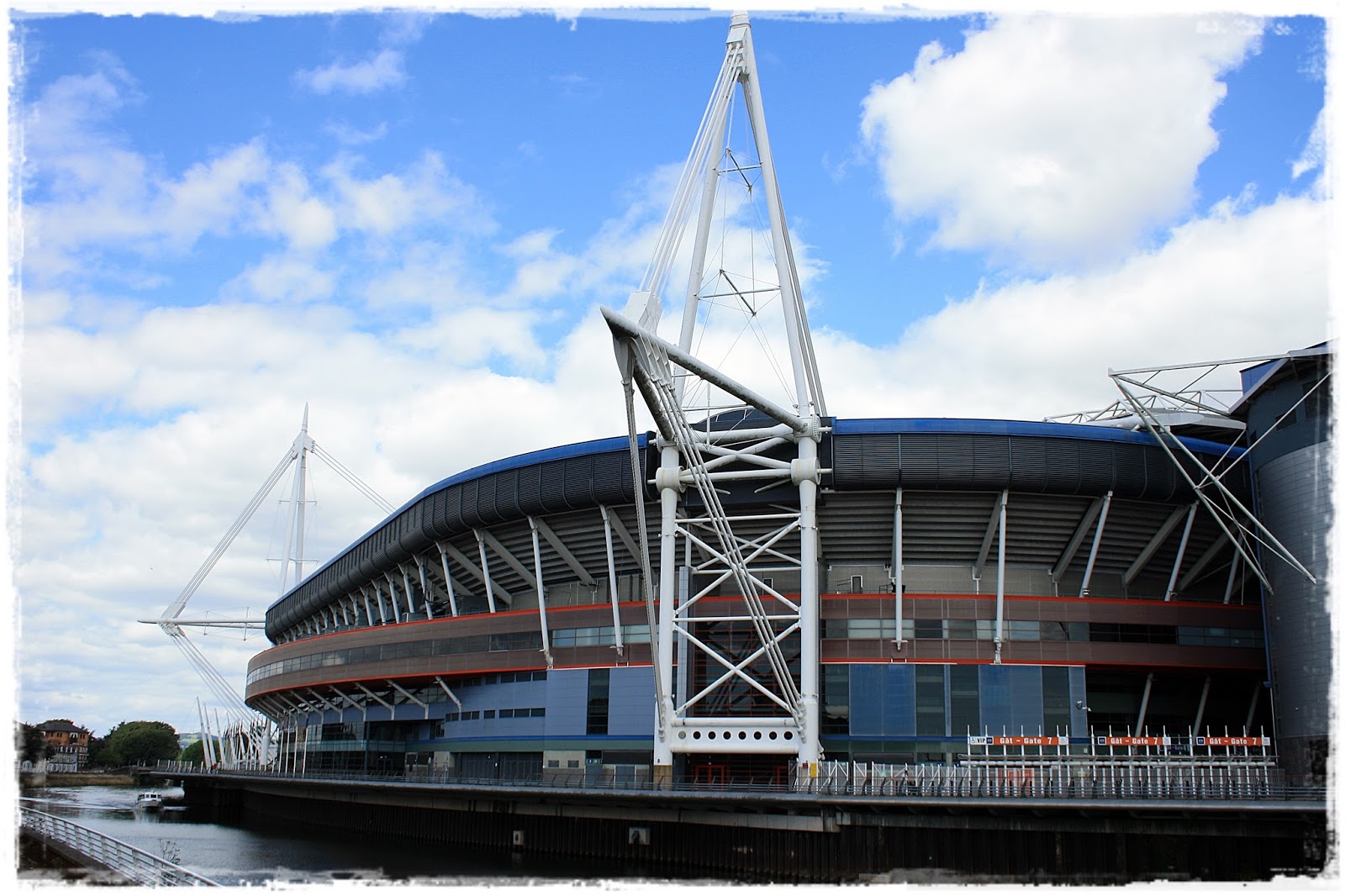
By the river shore, heading left as soon as you get out from the train station, you will find the Millenium Stadium. It is home of the Wales national rugby union team and hosted 11 football matches as part of the 2012 Summer Olympics, including the games' opening event and men's bronze medal match. The outstanding design is a work done by a team led by Bligh Loob Sports Architecture and opened in 1999. As a curiosity, it is the second stadium in the world with a fully retractable roof.

If we retrace our steps and go back to the train station, the pedestrian city centre will be located at our right. It consists of three shopping streets: Queen Street, St. Mary's Street and the Hayes. Along these road you will find large shopping centres as well as smaller specialized shops and boutiques. The Hayes has been scene for BBC's Doctor Who and Torchwood TV series. 

The new Central Library and the Alliance sculpture in front of it caught my attention: the building was specifically designed to be energy-efficient, and includes a sedum grass roof to improve insulation and reduce water run-off. The coloured glass panels and solar shading prevent excessive heat gains and a full Building Management System provides climate control to each of the five floors.

At the end of the shopping area, you will find the medieval Cardiff Castle. If you pay attention to the front wall, you will be able to identify parts of the original Roman fort. 

The essential admission ticket is £11 for adults  (£9.50 if student) and the daytime visit includes a presentation film, the visit to the interiors of Cardiff Castle and a free audio/guided tours. I have never visited the castle so I cannot tell you whether it is worth it or not, sorry!


UPDATE (4th Feb 2014): I have visited the castle in a later visit to Cardiff and there is not many things to see there. However, the views from the views from the tower are very very nice!


Cardiff City Hall, which was built in Portland stone, opened in 1906. It is a very beautiful building in the civic complex of Cathays Park. The clock behind is 194 feet high and it is very distinctive. It has one hour bell and four quarter bells which are each inscribed with mottoes in English or Welsh.


The National Museum of Wales, founded in 1907, is located right next to the City Hall. The entrance is for free thanks to a grant from the Welsh Government. The museum has collections of archaeology, botany, fine and applied art, geology and zoology. In 2011, it was transformed into a hands-on exploration centre.


Behind the National Museum of Wales, in Alexandra Gardens, there is the Welsh National War Memorial monument which conmemorates the servicemen who died during the WWI and WW2. On the frieze above the collumns are inscriptions in Welsh, on the outer side, and in English, on the inner side: "I FEIBION CYMRU A RODDES EU BYWYD DROS EI GWLAD YN RHYFEL MCMXVIII" (to the sons of Wales who gave their lives for their country in the War 1918).


Cardiff Bay Area
Mermaid Quay, it is called. You can smell the chic and cosmopolitan atmosphere in Cardiff Waterfront where you can find restaurants, cafes, bars and shops.
The bay is supplied by two rivers: Taff and Ely. The Bay forms a fresh water lake and the access to the sea is limited by three locks. I found it very beautiful the walk around the lake. It takes around 1.5h to walk it, and you get a very nice view of Cardiff from the other side of the lake.
Do not rush the walk, it is really worth it!


LINKS

-------------
Cardiff Castle: http://www.cardiffcastle.com/
Posted by Great little place called Bristol On Wednesday, August 14, 2013 No comments READ FULL POST

Thursday, 1 August 2013

Cheddar is a village of the English county of Somerset. The village has a population of 5,093 (ONS Census 2001) and it is located around 19 miles away from Bristol. After leaving work early, we decided to go visit the village and the famous Cheddar Gorge, as a friend of our suggested.

We took the car, and trusting the Navigator in my phone, we drove 45-50 minutes south along the A38. Apparently, it is the shortest way to get there, but until the moment you actually get to the A38, roads are extremelly narrow. At some point, there is not enough room for two vehicles, which brings moments of tension. Unless you want to have an exciting/risky drive, I would suggest you take the M5 South until Burham-on-Sea and then the A38 North towards Cheddar. It is probably a longer route but it takes the same time and the driving experience is more relaxed.


Cheddar Gorge is a limestone gorge in the Mendip Hills, and it is possibly the most famous attractions in Somerset. It was formed by meltwater floods during the cold periglaciar periods occurred over the last 1.2 million years, forming a gorge with a maximum depth of 137 metres. There are show caves in Cheddar Gorge where Britain's oldest complete human skeleton was found in 1903. The Cheddar Man, as it is commonly called, is estimated to be over 9,000 years old.

Once you get to Cheddar village, it is very easy to get to the Gorge. Everything is well indicated and there are lots of parking spaces along Cliff Road (B3135). We parked our car and walked along the road. Visiting Cheddar Gorge is free of charge. However, there are some signs around the parking areas to remind charges apply between 8am and 6pm.

The Gorge is magnificent. When you look up, it is very hard to believe you are still in England. Just one one hour away from Bristol and yet you believe you are in Thailand or New Zealand. Gorgeous place, definitely, a must-see.


We didn't see many people around; maybe some families, experienced climbers enjoying the walls and some other local people. It is also true that we got there late (around 6pm). If you are an experienced climber, you should check the information here.


And of course, there is a Gromit welcoming visitors at the entrance of the Cheddar Gorge. 


Cheddar Gorge and Caves are open everyday from 10am to 5.30pm in summer. We arrived a little late for any guided tour but for £18.98 (£16.11 online booking), you have access to Gough's Cave (+ audio guide), Museum of Prehistory, Cox's Cave and The Crystal Quest, the Lookout Tower, Cliff-top Gorge Walk and Open-top Bus Tour. 

After visiting the Gorge, we went the village. Unfortunately, everything is closed after 6pm... everything except Tesco Express! However, we followed some young guys who seemed to be locals, we found an open bar/restaurant called Riverside Inn & Restaurant. We had a beer in the airy conservatory, where the atmosphere was great, and the food they were cooking had an excellent smell! 


INTERESTING LINKS
------------------------
Cheddar Village: http://www.cheddarvillage.org.uk/
Cheddar Gorge: http://www.cheddargorge.co.uk/

Posted by Great little place called Bristol On Thursday, August 01, 2013 3 comments READ FULL POST

Saturday, 29 June 2013


Weston-super-Mare is a seaside town located on the Bristol Channel coast, 18 miles south west of Bristol. First group buses cover the route between Bristol and Weston-super-Mare for £6.50 return ticket. Bear in mind that week and month ticket holders will be able to travel for free during the weekend.


It takes around one hour to get to town and the bus stops in front of the Wheel of Weston. From there, we could already see some people relaxing in the sand, kids playing in the colorful swings in the beach while braver ones were bathing in the cold sea... and some donkeys and horses as well! Apparently, donkeys have been open for ride 7 days a week from Easter to October in Weston-super-Mare since 1886. 


Opposite to the yellow sand and blue sea I expected to find in Weston-super-Mare, the sand was very muddy and quite dangerous according to the signs ("Beware soft sand and mud, it is dangerous to approach the water at low tide"), and the sea, it was anything but blue! As you can appreciate in the picture on the left, the water has a brownish colour.


The Grand Pier is probably the most famous attraction of Weston-super-Mare. It is privately owned and was opened in 1904 as a theatre for music, opera and ballet performances. A fire destroyed the theatre at the pier in 1930 and next owners opened a new pavilion for undercover funfair, shops and amusement arcade to convert it into what it is now. It reminded me to the one in Brighton, in smaller scale.


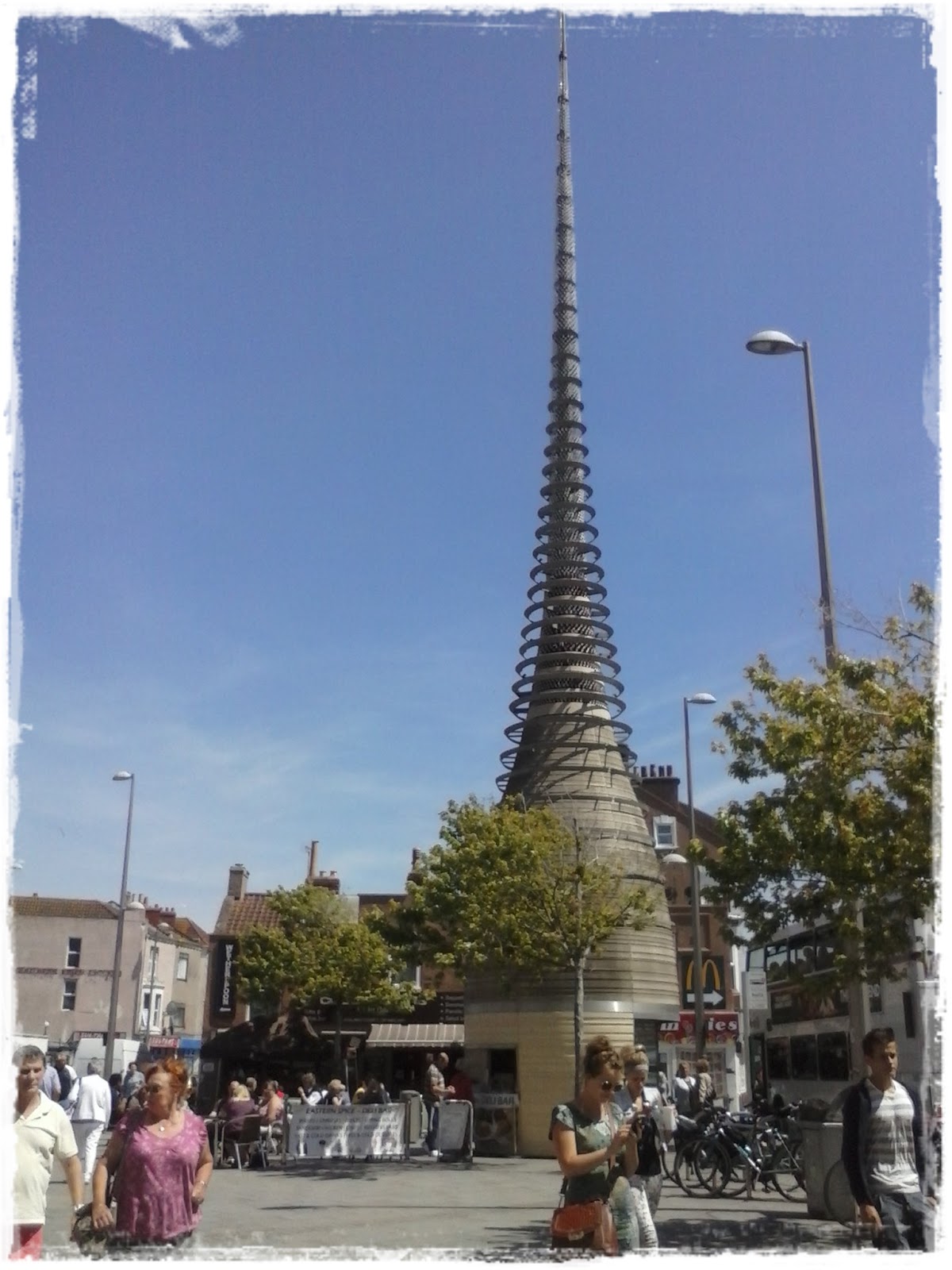
Streets around are full of amusement arcade and casino as well. Between casinos and fish-and-chip restaurants, we spotted the 'Silica', a piece of art, an advertising sign, a retail kiosk selling newspapers and hot food, as well as a bus shelter. Although it is meant to symbolise man's harmony with the sea, it has been criticised by local residents who liken it to a carrot or a spaceship.


We followed the promenade towards the Marine Lake and walked around it through the causeway. Birnbeck Pier, which is a little bit further, is probably the most mysterious thing you can find in Weston-super-Mare. There is no explanation around to explain why the pier is in such conditions nowadays. It was the only pier in the country which links the mainland to an island, linking Weston-super-Mare to Birnbeck Island, a 1.2 hectares of rocky island. The pier was designed by Eugenius Birch and opened in 1867. Between 19th and 20th centuries, it was popular both with locals and tourists to the town. As a boarding point for steamers plying their trade in Bristol Channel, it underwent various extensions and modifications over the years. However, the pier has been closed to the public since 1994 and it is impossible to access as the decking is badly decayed now.


On the way back and before heading back home, we stopped at the Cove Bar and Restaurant to have a £2.4 coffee (which was very good, by the way. Very special taste!) at the deck, where  we could enjoy the nice views of the bay as well as the sunny weather.


INTERESTING LINKS
---------------------
The Cove Bar and Restaurant:
http://www.the-cove.co.uk/

Posted by Great little place called Bristol On Saturday, June 29, 2013 1 comment READ FULL POST
  • RSS
  • Facebook
  • Twitter
  • Email
  • Linkedin
  • Youtube

Labels

Instagram


Like us on Facebook!

Twitter


Translate